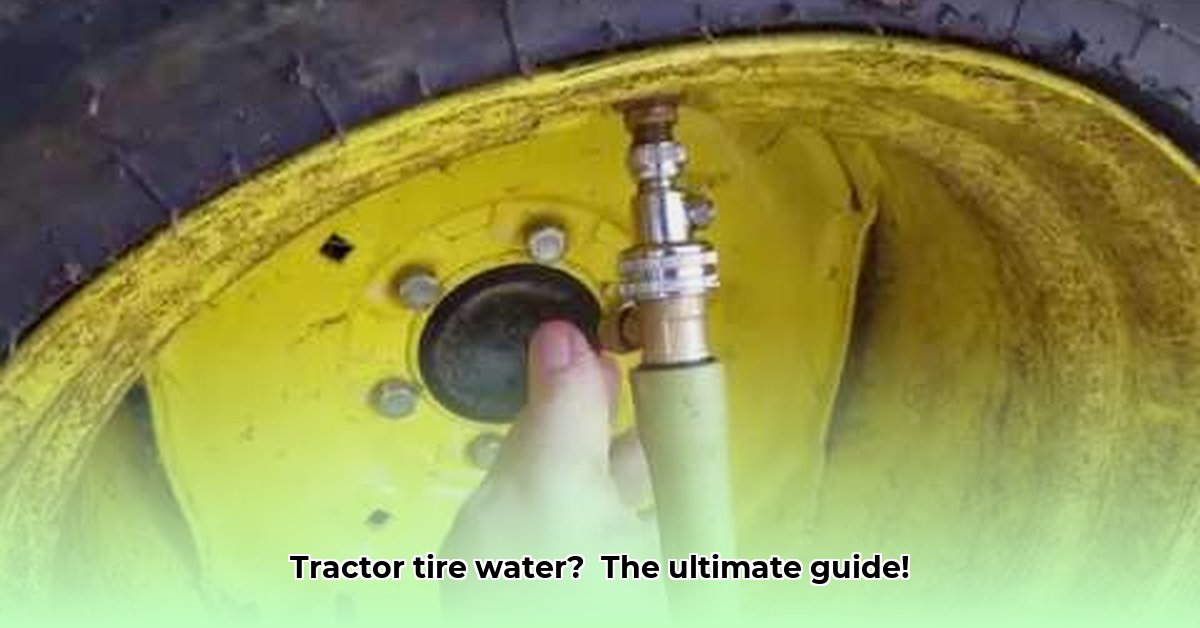
Adding ballast to your tractor tires significantly improves traction and stability, especially when working on uneven terrain or hauling heavy loads. While water is the most common and affordable option, several alternatives offer advantages depending on your climate and budget. For more detailed water-filling instructions, see this helpful guide. This guide provides step-by-step instructions for filling tires with water and compares other ballasting options to help you make an informed decision.
Filling Your Tractor Tires with Water: A Step-by-Step Guide
Before you begin, prioritize safety. Always wear sturdy work gloves and safety glasses.
Step 1: Prepare the Tire: Clean the valve stem and surrounding area thoroughly. Inspect for any damage (cuts, cracks) and repair as needed. Addressing small issues now prevents larger problems later.
Step 2: Gather Your Supplies: You'll need a garden hose with a controllable nozzle, a funnel (highly recommended), and potentially a wrench to loosen a stubborn valve cap. A tire pressure gauge is also essential.
Step 3: Connect the Hose: Securely attach the hose to the tire valve stem, ensuring a leak-free connection. A loose connection will dramatically slow down filling and can lead to frustration.
Step 4: Fill the Tire Slowly: Begin adding water gradually. Rapid filling can create excessive pressure, potentially causing a tire rupture. Maintain a consistent, controlled water flow.
Step 5: Monitor Tire Pressure: Regularly check the tire pressure using a gauge. Avoid overfilling! Consult your tractor's manual for the recommended pressure for your specific tire size and load. Overinflation can lead to tire damage and blowouts. A reliable pressure gauge is invaluable here.
Step 6: Inspect for Leaks: After filling, meticulously check the entire tire for leaks. Address any leaks immediately. Even small leaks quickly reduce ballast and performance.
Step 7: Consider Additives: In colder climates, adding antifreeze (a 50/50 mix of antifreeze and water) prevents freezing and expansion, which can damage tires. This precaution is crucial in frost-prone areas.
Beyond Water: A Comparison of Ballast Options
Water is inexpensive and readily available, but its susceptibility to freezing limits its usefulness in colder climates. Let's explore alternative ballasting options:
| Ballast Type | Advantages | Disadvantages | Freeze Resistance | Cost | Environmental Impact |
|---|---|---|---|---|---|
| Water | Inexpensive, readily available, easy to use | Freezes, may cause corrosion over time | Poor | Very Low | Minimal |
| Antifreeze (50/50) | Excellent freeze protection, widely available | Toxic if spilled, may damage rubber over extended use | Good | Moderate | Potentially Harmful |
| Calcium Chloride | Superior freeze protection | Highly corrosive, potential environmental concerns | Excellent | Moderate | Moderate |
| Polyurethane Foam | Exceptional freeze protection, eliminates leaks | Very expensive, requires professional installation | Excellent | High | Largely Unknown |
Choosing the Right Ballast: A Decision Matrix
The best ballast depends on several factors. Consider your climate, budget, and environmental impact.
Climate: Water is suitable for warm climates; antifreeze, calcium chloride, or polyurethane foam are better for cold climates. Isn't it crucial to consider your local climate before choosing a ballast solution?
Budget: Water is the cheapest option; polyurethane foam is the most expensive. How will your budget influence your selection from these diverse options?
Environmental Concerns: Water has minimal environmental impact; calcium chloride poses moderate risks; antifreeze has potential toxicity concerns. Does minimizing the environmental footprint of your farming practices matter to you?
This decision matrix summarizes the key aspects to consider:
| Ballast Type | Freeze Resistance | Cost | Environmental Impact | Corrosion Risk |
|---|---|---|---|---|
| Water | Low | Very Low | Low | Low |
| Antifreeze (PG) | High | Medium | Medium | Low |
| Calcium Chloride | Very High | Moderate | Moderate | High |
| Polyurethane Foam | Very High | High | Largely Unknown | Low |
Remember to consult your tractor's manual for specific tire pressure and ballast recommendations. Safe handling and proper disposal of ballast materials are crucial for both environmental protection and personal safety.